

Unlock the Secret to Creating Magical Dining Experiences
Wine and food pairing can transform an ordinary meal into an extraordinary experience. When done right, the combination elevates both the wine and the food, creating flavors greater than either could achieve alone. But with thousands of wines and endless food options, where do you start?
The good news: wine pairing doesn’t require years of study or a sommelier certification. By understanding a few fundamental principles and learning some classic combinations, you’ll quickly develop the confidence to create impressive pairings for any occasion.
This guide breaks down everything you need to know about wine and food pairing—from basic principles to specific recommendations—in practical, easy-to-understand terms.
The Basic Principles of Wine Pairing
1. Match Weight and Intensity
The most important rule: pair similar weights together. Light wines with light dishes, heavy wines with heavy dishes.
Light-bodied wines (Pinot Grigio, Sauvignon Blanc, light reds like Beaujolais) pair with delicate foods like fish, salads, and light pasta dishes.
Medium-bodied wines (Chardonnay, Merlot, Chianti) work with chicken, pork, and moderately rich dishes.
Full-bodied wines (Cabernet Sauvignon, Syrah, oaked Chardonnay) match hearty foods like steak, lamb, and rich cream sauces.
Why it works: When weights match, neither the wine nor food overwhelms the other. A delicate fish would disappear under a bold Cabernet, while a light Pinot Grigio gets lost with a rich beef stew.
2. Match or Contrast Flavors
You can either complement similar flavors or contrast opposite ones:
Complement: Pair buttery Chardonnay with buttery lobster, or earthy Pinot Noir with mushroom risotto. The similar flavors enhance each other.
Contrast: Pair sweet Riesling with spicy Thai food—the sweetness tames the heat. Or crisp Sauvignon Blanc with rich, creamy goat cheese—the acidity cuts through the fat.
Both approaches work beautifully when executed properly.
3. Consider the Sauce, Not Just the Protein
A common mistake: focusing only on the main protein. The sauce often matters more for pairing.
Example: Chicken can go dozens of directions:
- Grilled chicken with lemon = Sauvignon Blanc
- Chicken in cream sauce = Chardonnay
- BBQ chicken = Zinfandel
- Chicken curry = off-dry Riesling
Always consider what’s coating or accompanying your protein.
4. Acid Cuts Fat
High-acid wines cleanse your palate when eating fatty, rich foods.
Sparkling wines (Champagne, Prosecco, Cava) cut through fried foods, creamy sauces, and rich dishes beautifully. This is why Champagne and oysters is such a classic pairing—the acidity balances the brininess and richness.
Sauvignon Blanc and Italian reds (Chianti, Barbera, Sangiovese) have bright acidity that works wonderfully with tomato-based dishes and olive oil-rich foods.
5. Tannins Love Protein and Fat
Tannins—that drying sensation in red wines—bind with proteins and fats, softening both the wine and making the food more tender-seeming.
Red meat and Cabernet Sauvignon is the classic example. The tannins in the wine interact with the protein in the steak, making both taste better.
Avoid pairing tannic wines with fish—the combination can taste metallic and unpleasant.
6. Sweet Wines with Dessert (or Strong Cheese)
The wine should always be as sweet or sweeter than your dessert. Otherwise, the wine tastes sour and unbalanced.
Port pairs beautifully with chocolate desserts and blue cheese.
Sauternes matches perfectly with foie gras or fruit tarts.
Moscato d’Asti works wonderfully with fresh fruit and light desserts.
7. When in Doubt, Go Local
Regional food and wine evolved together for centuries. Italian wines pair naturally with Italian food, French wines with French cuisine, Spanish wines with Spanish tapas.
Chianti and Tuscan cuisine, Rioja and Spanish tapas, Sauvignon Blanc and Loire Valley goat cheese—these regional pairings rarely disappoint because they developed together over generations.
White Wine Pairing Guide
Sparkling Wine (Champagne, Prosecco, Cava)
Characteristics: High acidity, bubbles, ranges from bone-dry to slightly sweet
Perfect Pairings:
- Oysters and raw shellfish: Classic combination—acidity and bubbles complement brininess
- Fried foods: Cut through richness (fried chicken, tempura, fish and chips)
- Salty snacks: Potato chips, popcorn, salted nuts
- Soft cheeses: Brie, Camembert, triple-cream cheeses
- Eggs: Champagne is one of the few wines that pairs well with eggs
Why it works: The bubbles and high acidity refresh your palate, making each bite taste as good as the first.
Pro tip: Champagne is incredibly versatile—when stuck, choose sparkling wine. It pairs with more foods than almost any other wine.
Sauvignon Blanc
Characteristics: Crisp, high acidity, herbaceous, citrusy, sometimes grassy
Perfect Pairings:
- Goat cheese: The classic pairing—acidity cuts through tangy cheese
- Salads with vinaigrette: One of the few wines that works with vinegar-dressed salads
- Grilled fish: Especially with lemon or herb preparations
- Fresh herbs: Dishes with basil, cilantro, parsley
- Asparagus: Notoriously difficult to pair, but Sauvignon Blanc’s herbaceousness works
- Sushi: Clean flavors complement delicate fish
Avoid: Heavy cream sauces, which clash with the wine’s brightness
Chardonnay
Characteristics: Ranges from crisp and mineral (unoaked) to rich and buttery (oaked)
Unoaked Chardonnay Pairings:
- Light fish dishes
- Oysters and clams
- Caesar salad
- Grilled vegetables
Oaked Chardonnay Pairings:
- Lobster with butter: Luxurious pairing of rich wine and rich food
- Roast chicken: Classic Sunday dinner pairing
- Creamy pasta: Fettuccine Alfredo, carbonara
- Pork chops: Especially with apple or cream-based sauces
- Mild, creamy cheeses: Havarti, young Gouda
Why it works: Oaked Chardonnay’s buttery quality complements rich, creamy preparations, while its weight stands up to fuller-flavored dishes.
Riesling
Characteristics: Ranges from bone-dry to very sweet, high acidity, floral, fruity
Perfect Pairings:
- Spicy Asian cuisine: Thai, Indian, Szechuan—sweetness tames heat
- Pork: Especially with fruit-based sauces or Asian preparations
- Duck: Rich meat balanced by wine’s acidity and slight sweetness
- Blue cheese: Sweet wines contrast beautifully with pungent, salty cheese
- Fruit-based dishes: Pork with apples, chicken with apricots
Pro tip: When a dish is “too spicy” for most wines, reach for off-dry Riesling. The slight sweetness and high acidity make it incredibly food-friendly.
Pinot Grigio
Characteristics: Light-bodied, crisp, subtle fruit, easy-drinking
Perfect Pairings:
- Light seafood: Shrimp, scallops, mild white fish
- Light pasta: With olive oil, garlic, or light tomato sauce
- Grilled vegetables: Summer vegetable dishes
- Antipasto: Italian appetizers and light starters
- Chicken salads: Perfect lunch wine
Why it works: Its lightness doesn’t overwhelm delicate flavors, making it perfect for simple, fresh preparations.
Red Wine Pairing Guide
Pinot Noir
Characteristics: Light to medium-bodied, silky, red fruit flavors, earthy undertones, low tannins
Perfect Pairings:
- Salmon: One of the few reds that works with fish—especially grilled or roasted salmon
- Duck: Classic Burgundian pairing with duck confit or roasted duck
- Mushrooms: Earthy wine matches earthy mushrooms beautifully
- Pork tenderloin: Lean pork with fruit-based sauces
- Roasted chicken: Especially with herbs
- Soft, earthy cheeses: Brie, Camembert, young Gruyère
Why it works: Pinot Noir’s elegance and lower tannins make it incredibly versatile. Its silky texture complements rather than overwhelms.
Pro tip: When dining with people ordering both fish and red meat, Pinot Noir bridges the gap beautifully.
Merlot
Characteristics: Medium to full-bodied, soft tannins, plum and cherry flavors, smooth
Perfect Pairings:
- Roasted chicken: Comfort food pairing
- Pork roast: Especially with fruit-based glazes
- Lamb: Less intense than Cabernet but rich enough for red meat
- Pizza: Versatile enough for various toppings
- Pasta with meat sauce: Bolognese, lasagna, baked pasta dishes
- Medium-aged cheeses: Cheddar, Gouda
Why it works: Merlot’s soft tannins and approachable nature make it crowd-pleasing and food-friendly without being aggressive.
Cabernet Sauvignon
Characteristics: Full-bodied, high tannins, black fruit flavors, often oaked with vanilla and spice notes
Perfect Pairings:
- Steak: The ultimate pairing—tannins love protein and fat
- Lamb: Especially roasted or grilled preparations
- Beef stew: Rich, hearty dishes
- Hard cheeses: Aged cheddar, Manchego, Parmigiano-Reggiano
- Burgers: Yes, a good burger deserves good wine
- Dark chocolate: One of the few wines that pairs with chocolate
Avoid: Fish, light chicken dishes, or delicate foods that would be overwhelmed
Why it works: The high tannin content needs protein and fat to soften—steak and Cabernet literally make each other taste better through chemical interaction.
Syrah/Shiraz
Characteristics: Full-bodied, peppery, dark fruit, sometimes smoky
Perfect Pairings:
- BBQ and grilled meats: Smoky wine complements smoky food
- Game meats: Venison, wild boar, elk
- Spicy sausages: Chorizo, merguez
- Peppercorn-crusted steak: Pepper in the wine matches pepper on the meat
- Moroccan tagines: Spiced lamb dishes
- Strong cheeses: Aged Gouda, aged cheddar
Why it works: Syrah’s bold, spicy character stands up to intense flavors and rich preparations.
Zinfandel
Characteristics: Full-bodied, fruity, often jammy, high alcohol
Perfect Pairings:
- BBQ ribs: Sweet, smoky sauce matches wine’s fruit-forward character
- Pulled pork: BBQ in any form
- Spicy Italian sausage: Bold wine for bold flavors
- Pepperoni pizza: Casual pairing perfection
- Beef brisket: Slow-cooked, rich meats
Why it works: Zinfandel’s fruit-forward, almost sweet character complements BBQ sauces and spicy preparations.
Rosé Wine Pairing
Characteristics: Light to medium-bodied, dry to off-dry, red fruit flavors, refreshing
Perfect Pairings:
- Mediterranean cuisine: Greek, Turkish, Lebanese dishes
- Grilled vegetables and salads: Summer dining perfection
- Light pasta: With tomato-based sauces or olive oil
- Seafood paella: Spanish rice dishes
- Charcuterie: Cured meats and pâtés
- Provençal cuisine: Ratatouille, bouillabaisse
Why it works: Rosé’s versatility—having characteristics of both white and red wines—makes it incredibly food-friendly for warm-weather dining.
Pro tip: When hosting a diverse group with varied food preferences, rosé is your safest bet.
Pairing Wine with Challenging Foods
Spicy Foods
Best Choices: Off-dry Riesling, Gewürztraminer, Prosecco, rosé
Why: Slight sweetness and high acidity balance heat. Avoid high-alcohol, tannic reds which amplify spiciness.
Salads with Vinaigrette
Best Choices: Sauvignon Blanc, unoaked Chardonnay, Pinot Grigio
Why: High-acid wines match acidic dressings. Most wines taste flat with vinegar-based dressings, but crisp whites work.
Eggs
Best Choices: Champagne, Cava, Prosecco
Why: Sparkling wines are one of the few that don’t clash with eggs’ sulfur compounds. Perfect for brunch!
Asparagus
Best Choices: Sauvignon Blanc, Grüner Veltliner
Why: These wines’ herbaceous qualities complement asparagus rather than clashing.
Artichokes
Best Choices: Vermentino, Sauvignon Blanc, dry rosé
Why: Artichokes contain cynarin, which makes most wines taste sweet. Crisp, acidic wines handle this better.
Chocolate
Best Choices:
- Dark chocolate: Port, Cabernet Sauvignon, Zinfandel
- Milk chocolate: Merlot, tawny Port
- White chocolate: Moscato d’Asti, ice wine
Why: Match the intensity—bolder wines with dark chocolate, lighter wines with milk chocolate.
Creating Wine Pairing Menus
Three-Course Dinner Pairing
Appetizer: Seared scallops with citrus beurre blanc Wine: Unoaked Chardonnay or Sauvignon Blanc
Main Course: Herb-crusted rack of lamb Wine: Cabernet Sauvignon or Bordeaux blend
Dessert: Dark chocolate torte Wine: Port or late-harvest Zinfandel
Principle: Start lighter and build in intensity, ensuring each course doesn’t overpower the next.
Wine Tasting Dinner Format
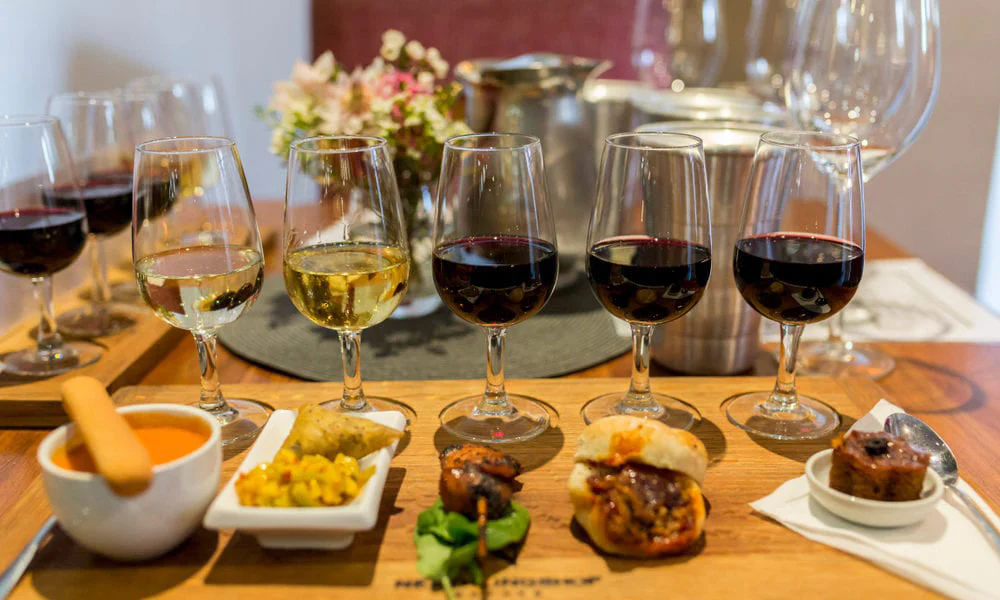
For a more educational experience, serve 4-6 wines with small portions of paired foods:
Course 1: Sparkling wine + smoked salmon canapés Course 2: Sauvignon Blanc + goat cheese and herb tart Course 3: Pinot Noir + duck confit Course 4: Cabernet Sauvignon + beef tenderloin with blue cheese butter Course 5: Port + dark chocolate truffles
This format allows guests to experience progression while learning about pairing principles.
Themed Wine Dinners
Italian Night:
- Prosecco + antipasto
- Pinot Grigio + risotto
- Chianti + osso buco
- Moscato d’Asti + tiramisu
French Evening:
- Champagne + oysters
- Sancerre + goat cheese tart
- Burgundy Pinot Noir + coq au vin
- Sauternes + crème brûlée
Spanish Fiesta:
- Cava + jamón ibérico
- Albariño + grilled octopus
- Rioja + paella
- Pedro Ximénez sherry + almond cake
Hosting a Wine Pairing Dinner at Home
Planning Your Menu
- Choose your theme: Regional cuisine, seasonal ingredients, or favorite wine region
- Select wines first or food first: Either approach works—build around your anchor
- Consider your guests: Dietary restrictions, wine knowledge level, preferences
- Balance the menu: Vary proteins, cooking methods, and intensities
- Include palate cleansers: Bread, neutral crackers, or sorbet between courses
Wine Selection Tips
Number of Wines:
- Casual dinner: 2-3 wines
- Special occasion: 4-5 wines
- Formal tasting: 6-8 wines
Quantities:
- Plan 5-6 glasses per bottle
- For pairing dinners: 3-4 oz pours per wine
- Always have extra—better too much than running out
Temperature:
- Whites: 45-55°F (refrigerate 2 hours)
- Reds: 60-65°F (light chill for 20-30 minutes)
- Sparklings: 40-50°F (refrigerate 3-4 hours)
Presentation Matters
Glassware: Use proper wine glasses—not required to be expensive, but correct shapes enhance wine
Serving Order: Light to heavy, white to red, dry to sweet
Wine Information: Create simple cards noting wine name, region, and why it pairs with each dish
Pace: Allow 20-30 minutes per course for relaxed conversation and appreciation
Engagement: Encourage guests to share impressions—wine is subjective and discussion enhances enjoyment
Wine and Cheese Pairing Essentials
Cheese and wine pairing deserves special attention—it’s one of the most popular and accessible pairing experiences.
General Principles
Soft cheeses (Brie, Camembert) → Champagne, Chardonnay, Pinot Noir
Hard aged cheeses (Parmigiano-Reggiano, aged Gouda) → Cabernet Sauvignon, Chianti, Barolo
Blue cheeses (Gorgonzola, Roquefort, Stilton) → Port, Sauternes, late-harvest wines
Goat cheese → Sauvignon Blanc (classic pairing)
Fresh mozzarella → Pinot Grigio, Prosecco
Sharp cheddar → Cabernet Sauvignon, Merlot, Zinfandel
Creating a Cheese Board
Select 3-5 cheeses with variety:
- One soft (Brie)
- One hard (aged cheddar)
- One blue (Gorgonzola)
- One goat (chèvre)
- One wild card (smoked Gouda or truffle cheese)
Pair with 2-3 wines that work across the selection:
- Champagne (works with almost all cheese)
- Pinot Noir (versatile enough for most cheeses)
- Port (perfect with blue and aged cheeses)
Add accompaniments: grapes, figs, honey, nuts, crackers, and cured meats
Common Wine Pairing Mistakes to Avoid
Mistake 1: Over-Oaking
Heavily oaked wines can overpower delicate foods. Match oaky wines with similarly bold, rich preparations.
Mistake 2: Ignoring Acidity
Without adequate acidity in the wine, rich, fatty foods can feel heavy and cloying. Always consider acid level.
Mistake 3: Serving Reds Too Warm
Room temperature red wine (70°F+) tastes alcoholic and flabby. Most reds taste best slightly chilled (60-65°F).
Mistake 4: Pairing by Color Alone
“White wine with fish, red wine with meat” is too simplistic. Consider preparation method and sauces.
Mistake 5: Choosing Wine You Don’t Like
Even if “perfect” on paper, if you don’t enjoy the wine, the pairing won’t work for you. Trust your palate.
Conclusion: Trust Your Palate
Wine pairing ultimately comes down to personal preference. These guidelines provide a framework, but your taste is what matters most. The best pairing is one you enjoy, regardless of what “experts” say.
Start with classic pairings to build confidence, then experiment. Keep notes on what works for you. Most importantly, don’t stress—wine should enhance enjoyment, not create anxiety.
The beauty of wine and food pairing lies in discovery. Each combination teaches you something new about both wine and food. With practice, you’ll develop intuition for what works, impressing friends and enhancing every meal.
Experience Expert Wine Pairings at Elegant Kaya
Want to learn wine pairing in an immersive, delicious way? Elegant Kaya offers curated wine tasting dinners at our Diani Beach villa, where you’ll experience perfectly paired multi-course meals while learning pairing principles from experts.
Wine Dinner Experiences Include:
- Themed regional menus (Italian, French, Spanish, Napa Valley)
- 4-5 carefully selected wines paired with each course
- Educational components explaining each pairing
- Intimate candlelit villa setting
- Private chef-prepared cuisine
- Small groups for personalized attention
Perfect for: Couples’ romantic evenings, small groups, special celebrations, or anyone wanting to deepen wine knowledge while enjoying exceptional cuisine
Also Available: Join our international wine tours to experience regional pairings in their countries of origin—taste Chianti with Tuscan cuisine in Tuscany, Rioja with tapas in Spain, Stellenbosch wines with South African braai.
Contact Elegant Kaya today to book your wine pairing dinner or inquire about upcoming wine tours. Transform your understanding of wine and food while creating unforgettable memories.
Join our Wine Travel Circle: Subscribe for wine pairing tips, recipes, seasonal pairing ideas, and announcements of wine dinner events and tours.

